

The Research Behind Harvest
Research foundations for Soil, Grounded, and The Gardener
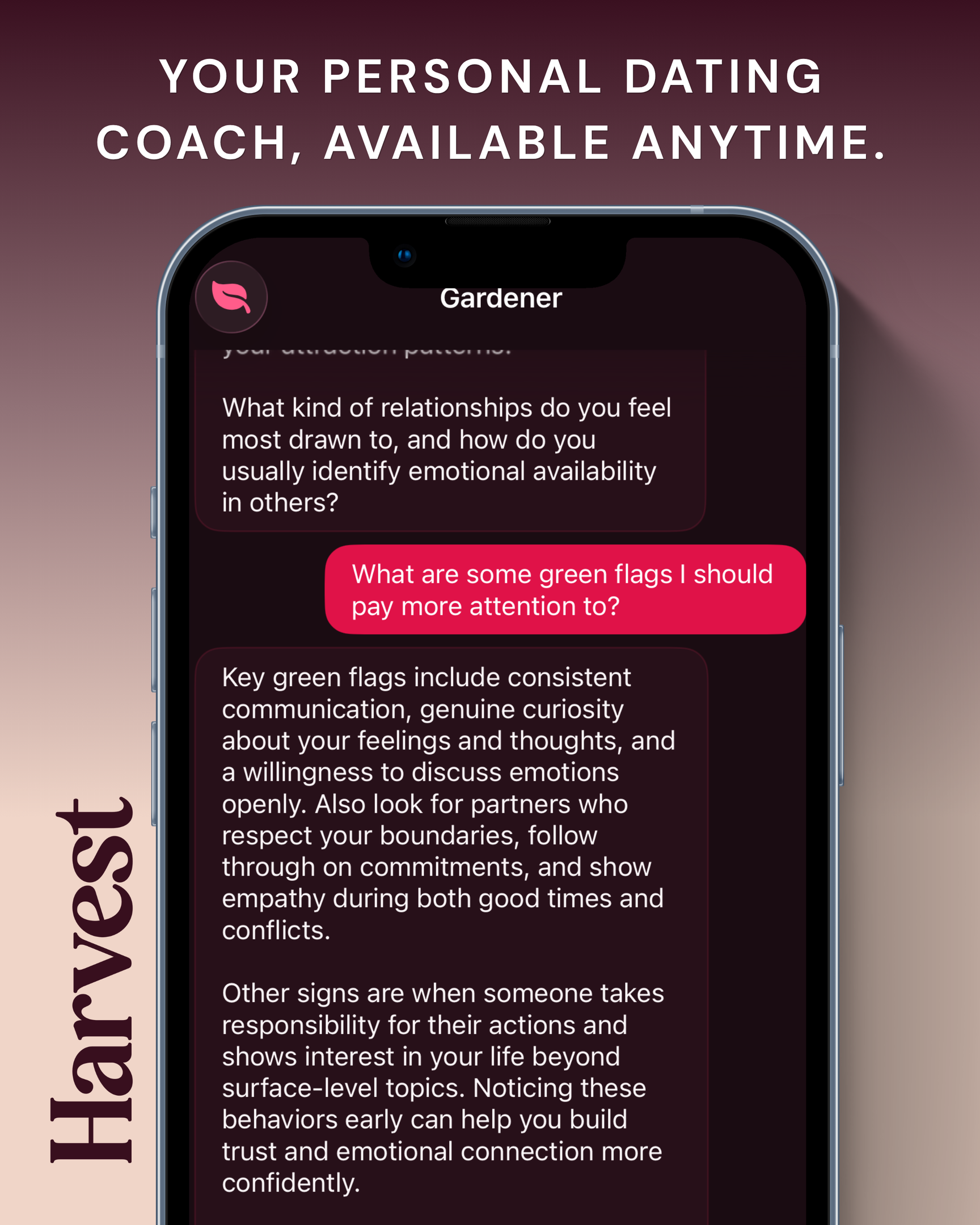
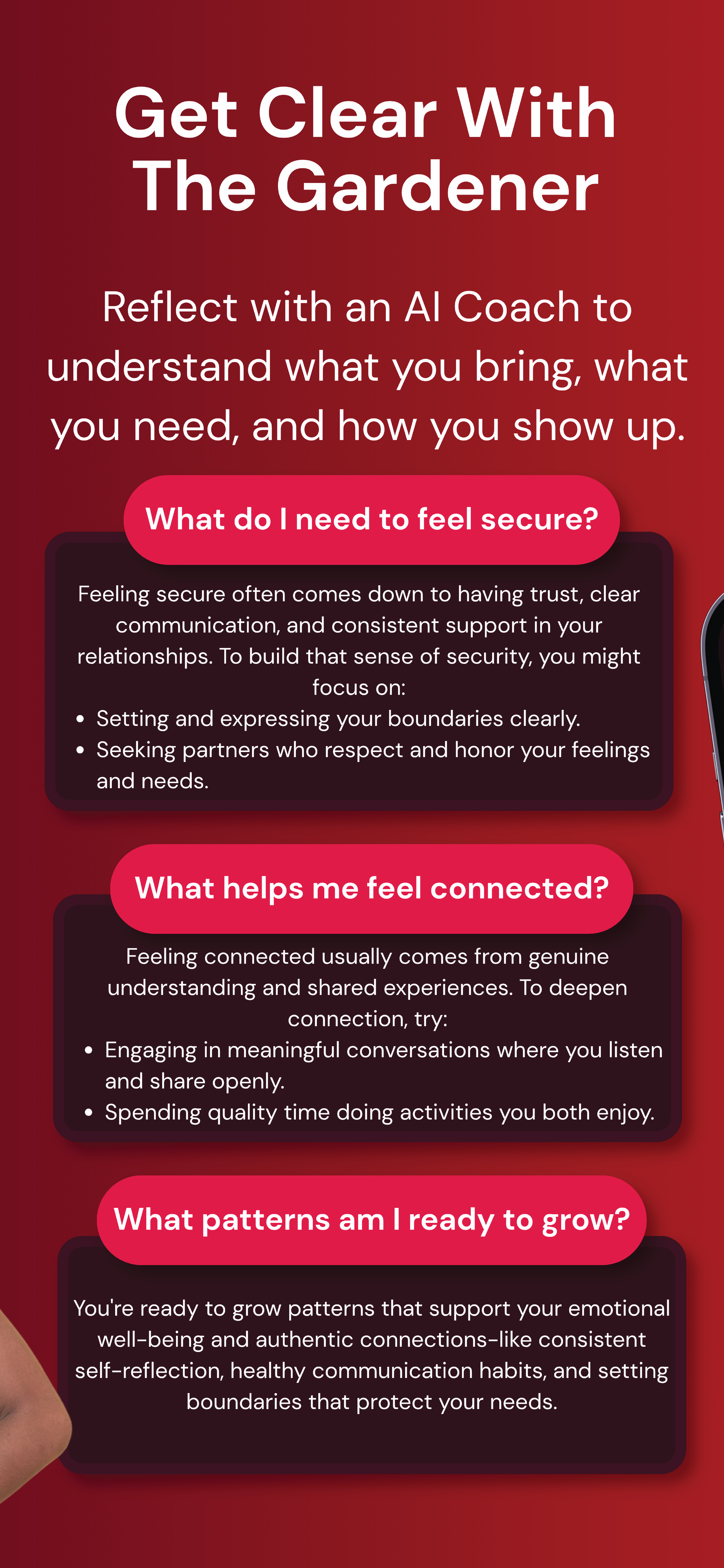
Harvest draws on relationship science to connect three parts of the product: Soil, the values framework; Grounded, the behavioral framework; and The Gardener, the built-in generative AI dating coach created for Harvest using OpenAI models. The research base includes long-standing and recent empirical work on partner responsiveness, attachment, trust, autonomy, emotion regulation, conflict and repair, commitment, intimacy, coercive control, and relationship stability.
1. Soil: Relational Values and Priorities
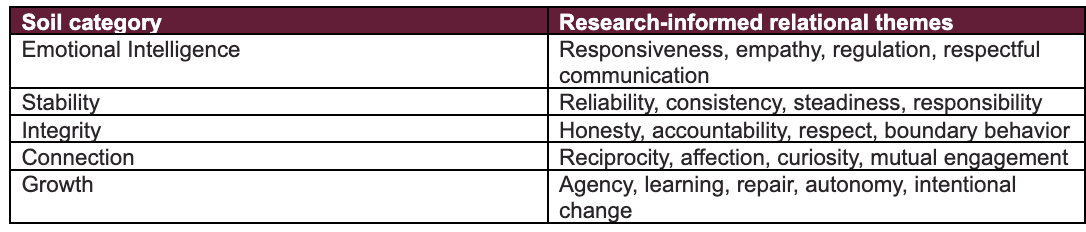
Soil organizes relationship values into five user-facing categories: Emotional Intelligence, Stability, Integrity, Connection, and Growth. The questionnaire examines these values from two perspectives: I Bring, which reflects qualities users believe they tend to contribute in relationships, and I Need, which reflects qualities they most value receiving from a partner.
The framework was informed by research on emotional responsiveness, attachment security, interpersonal trust, relationship commitment, conflict repair, emotional intimacy, autonomy, affection, and relational growth. Scenario-based questions place those values inside realistic relationship situations involving closeness, conflict, vulnerability, reassurance, responsibility, affection, and future orientation.

2. Grounded: Observable Relationship Behavior
Grounded translates broad relationship concepts into patterns The Gardener can evaluate in conversations and interactions. Its eight dimensions create a consistent behavioral vocabulary for interpreting how relational values appear in practice.
Responsiveness
Listening, validation, curiosity, attentiveness, and response to positive or difficult disclosures.
Reciprocity
The movement of effort, disclosure, planning, curiosity, and accommodation between both people.
Agency
Responsibility for personal choices, emotions, logistics, and life functioning.
Autonomy & Boundaries
Respect for limits, privacy, independence, consent, and freedom from pressure or coercion.
Respect & Regard
The way disagreement, frustration, and difference are handled, including contempt, hostility, and personal attack.
Emotional Regulation
The management and communication of strong emotion, reassurance needs, escalation, and withdrawal.
Accountability & Repair
Ownership of behavior, acknowledgment of impact, repair attempts, and behavioral change.
Consistency & Investment
Follow-through, reliability, persistence, investment, and alignment between words and behavior.
2. Grounded: Cbservable Relationship Behavior
Partner responsiveness & intimacy: Laurenceau, Barrett & Pietromonaco; Gable et al.; Smallen et al.
Attachment & emotional security: Bowlby; Ainsworth; Hazan & Shaver; Candel & Turliuc.
Trust & commitment: Rempel, Holmes & Zanna; Rusbult; Tran, Judge & Kashima.
Emotion regulation & conflict: Bloch, Haase & Levenson; Gottman & Levenson.
Autonomy, boundaries & coercive control: Weinstein et al.; Lohmann et al.; recent sexual-autonomy-support research.
Relationship maintenance & positive responding: Gable et al.; Otto et al.; relationship-maintenance and reciprocity literature.
Digital relationship behavior: Recent longitudinal work on social-media jealousy and electronic partner surveillance.
Growth & self-expansion: Aron & Aron and subsequent self-expansion research.
3. How The Gardener Applies the Research
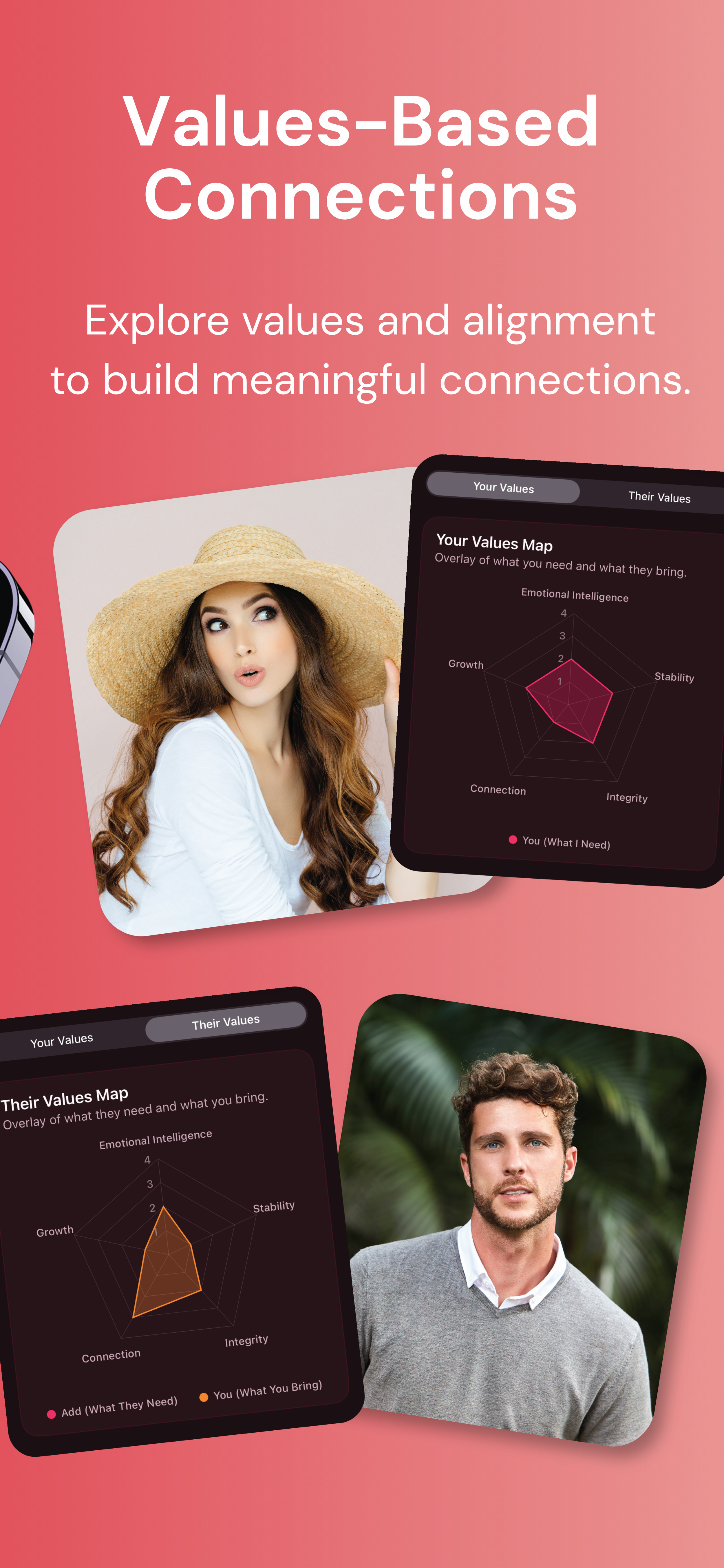
Users can privately upload conversations or screenshots for analysis. The Gardener evaluates the interaction through a structured reasoning sequence that starts with what was actually said or done and then considers context, repetition, both people’s contributions, alternative explanations, relevant Grounded dimensions, and alignment with the user’s stated values.
Identify observable behavior before interpreting motive.
Separate direct evidence from inference.
Consider surrounding context and whether a pattern is isolated or repeated.
Evaluate both people when enough of both sides is visible.
Consider reasonable alternative explanations when the evidence is ambiguous.
Connect relevant patterns to Soil values and the user’s I Bring / I Need priorities.
Keep the strength of the conclusion proportional to the evidence.
Grounded uses three user-facing evidence levels: Rooted Strength for positive relational evidence, Worth Noticing for meaningful but still uncertain information, and Grounding Concern for clearer, repeated, or intrinsically serious patterns that may undermine healthy relationship functioning.
4. Neutrality and Evidence Checks
The Gardener’s reasoning layer includes checks intended to reduce unsupported conclusions and one-sided analysis. Training examples include ambiguous situations, benign explanations, cases where the uploader contributed to the problem, cases where both people contributed, role-reversal tests, and multi-turn examples in which repetition changes the strength of the conclusion.
Does the response distinguish what happened from what someone may have intended?
Does it avoid automatically siding with the person who uploaded the conversation?
Does it treat one event differently from a repeated pattern?
Does it consider a reasonable alternative explanation when one exists?
Does it apply the same standard across genders and roles?
Is the strength of the conclusion proportional to the available evidence?
5. Research Areas Represented
Bloch, L., Haase, C. M., & Levenson, R. W. (2014). Emotion regulation predicts marital satisfaction: More than a wives’ tale. Emotion, 14(1), 130–144.
Candel, O.-S., & Turliuc, M. N. (2019). Insecure attachment and relationship satisfaction: A meta-analysis of actor and partner associations. Personality and Individual Differences, 147, 190–199.
Gable, S. L., Reis, H. T., Impett, E. A., & Asher, E. R. (2004). What do you do when things go right? Journal of Personality and Social Psychology, 87(2), 228–245.
Laurenceau, J.-P., Barrett, L. F., & Pietromonaco, P. R. (1998). Intimacy as an interpersonal process. Journal of Personality and Social Psychology, 74(5), 1238–1251.
Laurenceau, J.-P., Barrett, L. F., & Rovine, M. J. (2005). The interpersonal process model of intimacy in marriage. Journal of Family Psychology, 19(2), 314–323.
Lohmann, S., et al. (2024). The trauma and mental health impacts of coercive control: A systematic review and meta-analysis. Trauma, Violence, & Abuse.
Otto, A. K., Laurenceau, J.-P., Siegel, S. D., & Belcher, A. J. (2015). Capitalizing on everyday positive events uniquely predicts daily intimacy and well-being. Journal of Family Psychology, 29(1), 69–79.
Rempel, J. K., Holmes, J. G., & Zanna, M. P. (1985). Trust in close relationships. Journal of Personality and Social Psychology, 49(1), 95–112.
Tran, P., Judge, M., & Kashima, Y. (2019). Commitment in relationships: An updated meta-analysis of the Investment Model. Personal Relationships, 26(1), 158–180.
Weinstein, N., et al. (2016). Autonomy support and diastolic blood pressure: Long-term effects and conflict navigation in romantic relationships. Motivation and Emotion.